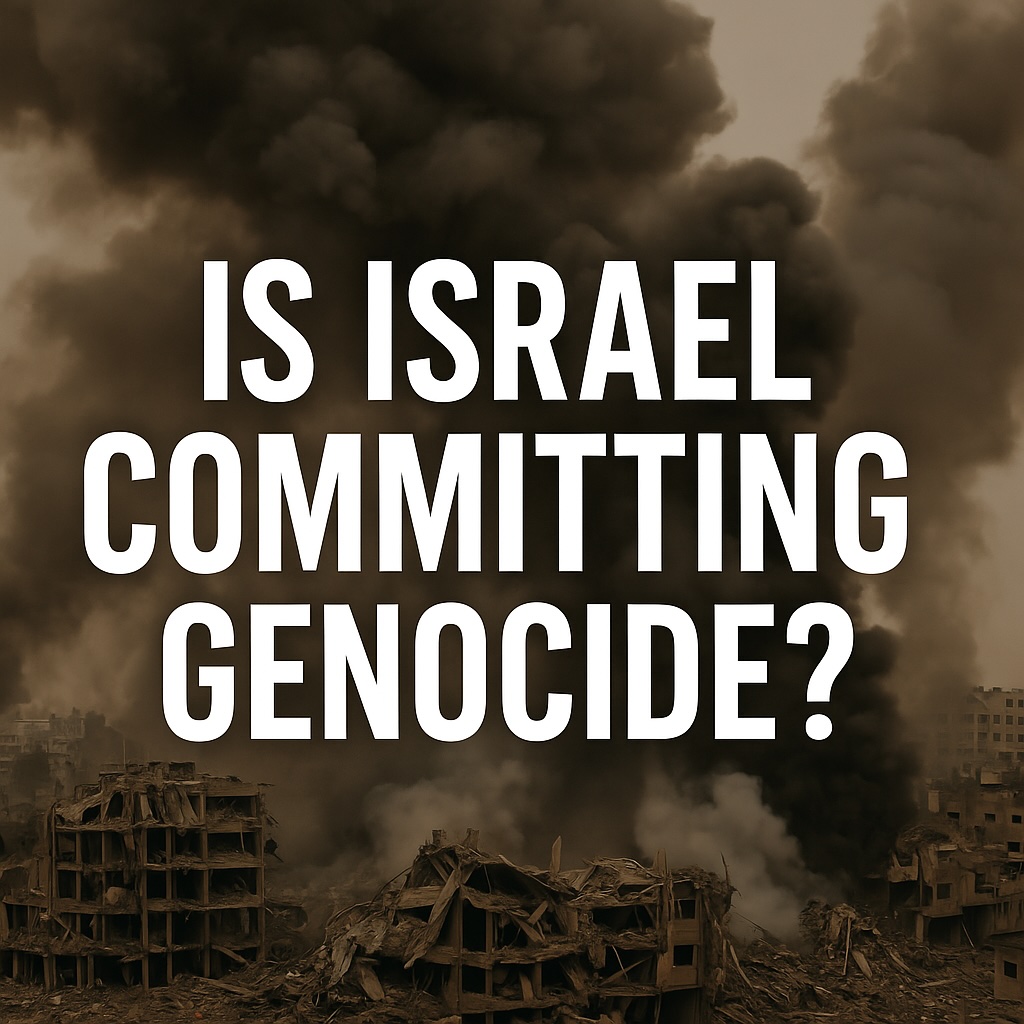
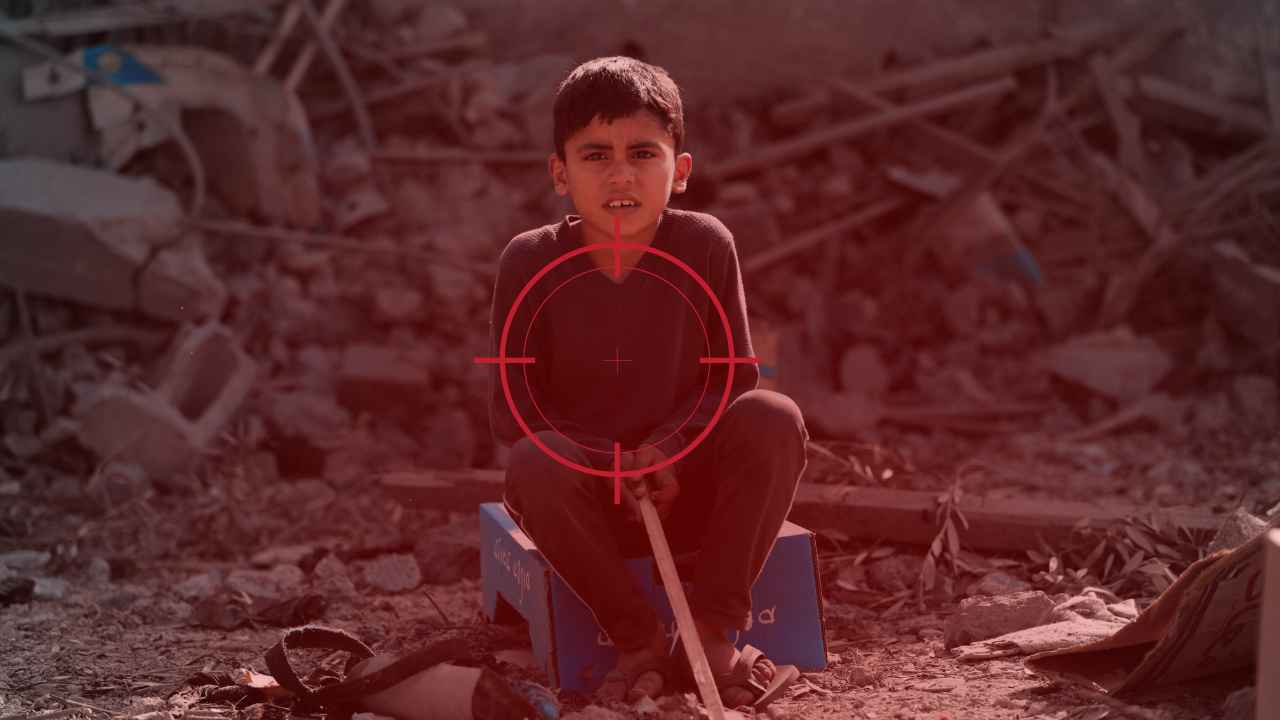
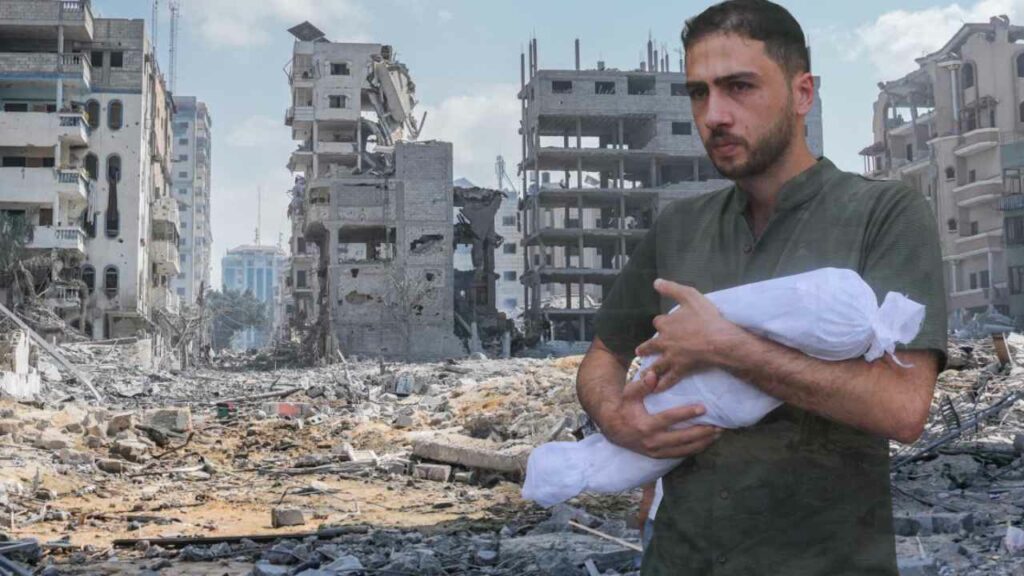
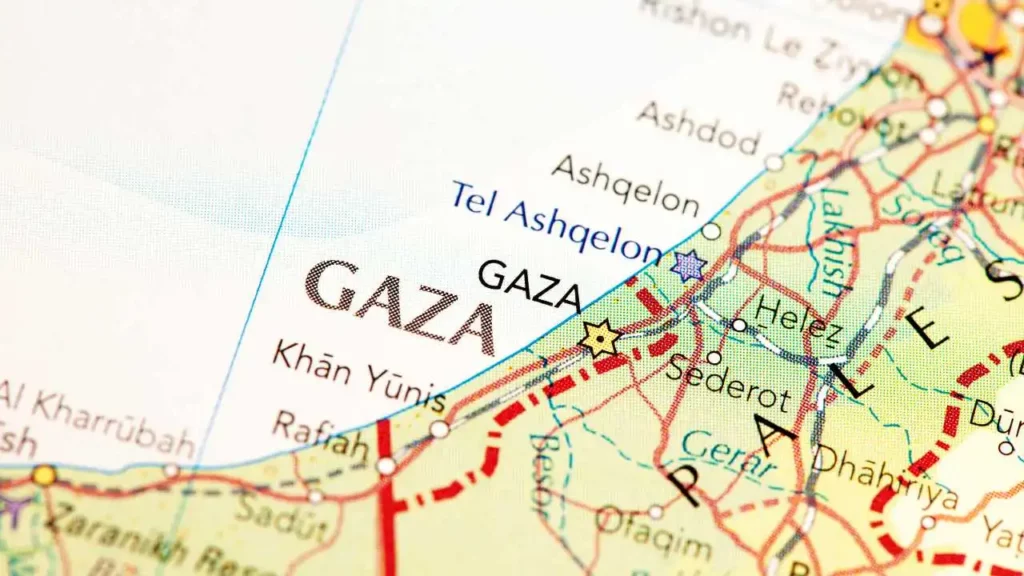
The humanitarian catastrophe unfolding in Gaza has been described by leading human rights organizations and UN experts as an ongoing genocide against the Palestinian people (UN experts say ceasefire needed as Palestinians at ‘grave risk of genocide’ | Reuters) (Israel’s war in Gaza amounts to genocide, Amnesty International report finds | Israel-Gaza war | The Guardian). Since October 2023, Israeli forces have “unleashed hell” on Gaza’s 2.3 million residents with relentless bombardment, siege, and displacement (Israel’s war in Gaza amounts to genocide, Amnesty International report finds | Israel-Gaza war | The Guardian), resulting in tens of thousands of civilian deaths – including a huge proportion of women and children (UN experts say ceasefire needed as Palestinians at ‘grave risk of genocide’ | Reuters). The Israeli government and military stand accused of committing atrocity crimes with the “specific intent to destroy” Palestinians in Gaza (Israel’s war in Gaza amounts to genocide, Amnesty International report finds | Israel-Gaza war | The Guardian). This strategic action plan outlines comprehensive steps to halt the violence, ensure accountability, and deliver justice for victims. It addresses legal pathways to intervention, diplomatic and state-led measures, grassroots mobilization, and international pressure tactics. Clear responsibilities of perpetrators and enablers are identified – from top Israeli leaders and institutions to the states and corporations abetting their actions. Finally, concrete calls to action are provided for policymakers, human rights groups, journalists, activists, and ordinary citizens to work in concert to stop the genocide. History will not forgive inaction – this plan is a roadmap for united efforts to end the bloodshed and uphold international law.
Understanding the Crisis: Perpetrators and Enablers of the Atrocities
Alleged Genocide in Gaza: According to a landmark December 2024 report by Amnesty International, Israel’s war on Gaza “constitutes the crime of genocide under international law.” The 296-page investigation found that Israeli forces have “committed prohibited acts under the Genocide Convention” – including mass killings, inflicting serious harm, and deliberately creating conditions of life intended to physically destroy Gaza’s population – “with the specific intent to destroy Palestinians” in the territory (Israel’s war in Gaza amounts to genocide, Amnesty International report finds | Israel-Gaza war | The Guardian). This marks the first time a major human rights NGO has formally accused Israel of genocide during an active conflict (Israel’s war in Gaza amounts to genocide, Amnesty International report finds | Israel-Gaza war | The Guardian) (Israel’s war in Gaza amounts to genocide, Amnesty International report finds | Israel-Gaza war | The Guardian). UN officials echo this conclusion: a group of seven independent UN special rapporteurs warned in November 2023 that Palestinians in Gaza are at “grave risk of genocide” absent urgent intervention (UN experts say ceasefire needed as Palestinians at ‘grave risk of genocide’ | Reuters). They noted that weeks of indiscriminate Israeli bombardment had already killed over 9,000 people (over 40% children) by that point (UN experts say ceasefire needed as Palestinians at ‘grave risk of genocide’ | Reuters). The UN experts demanded an immediate ceasefire and humanitarian access, emphasizing that “time is running out” to prevent annihilation of the trapped population (UN experts say ceasefire needed as Palestinians at ‘grave risk of genocide’ | Reuters) (UN experts say ceasefire needed as Palestinians at ‘grave risk of genocide’ | Reuters). These assessments underscore that what is happening in Gaza is not a “normal” military campaign but a systematic campaign of mass violence aimed at destroying a civilian population, which squarely meets the legal definition of genocide (UN experts say ceasefire needed as Palestinians at ‘grave risk of genocide’ | Reuters).
Primary Perpetrators – Israeli Leaders and Institutions: The State of Israel’s top leadership and military apparatus are principally responsible for orchestrating and executing the assault on Gaza. Israeli Prime Minister Benjamin Netanyahu and Defense Minister Yoav Gallant – the key decision-makers directing the war – have already been identified by international jurists as bearing criminal responsibility. In November 2024, the International Criminal Court (ICC) issued arrest warrants for Netanyahu and Gallant, finding reasonable grounds that both men, as co-perpetrators, committed war crimes and crimes against humanity against Gaza’s civilian population (Situation in the State of Palestine: ICC Pre-Trial Chamber I rejects the State of Israel’s challenges to jurisdiction and issues warrants of arrest for Benjamin Netanyahu and Yoav Gallant | International Criminal Court) (Situation in the State of Palestine: ICC Pre-Trial Chamber I rejects the State of Israel’s challenges to jurisdiction and issues warrants of arrest for Benjamin Netanyahu and Yoav Gallant | International Criminal Court). The ICC judges specifically cited the “widespread and systematic” attacks on Gaza’s civilians and the use of starvation and deprivation of essentials like food, water, medicine, fuel, and electricity as tactics of war (Situation in the State of Palestine: ICC Pre-Trial Chamber I rejects the State of Israel’s challenges to jurisdiction and issues warrants of arrest for Benjamin Netanyahu and Yoav Gallant | International Criminal Court) (Situation in the State of Palestine: ICC Pre-Trial Chamber I rejects the State of Israel’s challenges to jurisdiction and issues warrants of arrest for Benjamin Netanyahu and Yoav Gallant | International Criminal Court). In the Court’s assessment, Netanyahu and Gallant knowingly impeded humanitarian aid and targeted civilians, acts which ongoing evidence suggests were deliberate policy (Situation in the State of Palestine: ICC Pre-Trial Chamber I rejects the State of Israel’s challenges to jurisdiction and issues warrants of arrest for Benjamin Netanyahu and Yoav Gallant | International Criminal Court) (Situation in the State of Palestine: ICC Pre-Trial Chamber I rejects the State of Israel’s challenges to jurisdiction and issues warrants of arrest for Benjamin Netanyahu and Yoav Gallant | International Criminal Court). Beyond these two figures, other members of Israel’s war cabinet and military high command are deeply implicated – including the Israel Defense Forces (IDF) General Staff who plan and carry out airstrikes and ground operations that have leveled entire neighborhoods and killed thousands. The IDF as an institution has executed repeated attacks on homes, hospitals, schools, and refugee camps in Gaza, which multiple observers – from the UN Secretary General to global NGOs – have condemned as blatant violations of international law. While Israel claims to be targeting Hamas fighters, the death toll and pattern of destruction indicate a punitive campaign against the Palestinian population at large. Indeed, Amnesty found that Israel has “brazenly, continuously and with total impunity…unleashed hell” on civilians in Gaza, far beyond any legitimate military necessity (Israel’s war in Gaza amounts to genocide, Amnesty International report finds | Israel-Gaza war | The Guardian). It must be emphasized that nothing can justify genocide – no atrocity by Hamas or any group can legitimize the wholesale destruction of Gaza’s people (Israel’s war in Gaza amounts to genocide, Amnesty International report finds | Israel-Gaza war | The Guardian).
Enabling International Actors: Genocide does not occur in a vacuum. A network of international actors has enabled Israel’s campaign through military support, diplomatic protection, and political cover. Foremost among them is the United States. The U.S. is Israel’s chief arms supplier and defender on the world stage. Under a long-term agreement, the U.S. provides $3.8 billion every year in military aid to Israel (Ending Military Aid to Israel: The Death of a Taboo?) – funding that bankrolls the very jets, bombs, and missiles raining down on Gaza. In late 2023, as the Gaza onslaught escalated, the U.S. approved an additional $14 billion emergency military aid package for Israel (What Every American Should Know About U.S. Aid to Israel | AJC), signaling unwavering support even amid reports of mass civilian casualties. Diplomatically, Washington has repeatedly wielded its UN Security Council veto to shield Israel from censure. As of December 2023, the U.S. had vetoed 45 UNSC resolutions critical of Israel – over half of all its vetoes in UN history (How the US uses its UN veto power to protect Israel). This includes vetoing calls for a Gaza ceasefire in October 2023 (How the US uses its UN veto power to protect Israel) (How the US uses its UN veto power to protect Israel), effectively emboldening Israel to continue its military campaign, as was angrily noted by many nations (Veto of Security Council Resolution Calling for Ceasefire in Gaza …) (The U.S. has vetoed a Gaza cease-fire resolution in the U.N. … – NPR). Other Western powers like the United Kingdom and some EU member states have also provided cover or arms. The UK, for example, has licensed at least £500 million worth of military exports to Israel since 2015 ( Does the UK sell arms to Israel? | Oxfam GB). Shockingly, over 100 new UK arms export licenses were approved during October 2023 – May 2024, even as thousands of Gazan civilians were being killed ( Does the UK sell arms to Israel? | Oxfam GB). Although Britain suspended a small number of these licenses under public pressure, hundreds remain active, implicating the UK in supplying weapons used in unlawful attacks ( Does the UK sell arms to Israel? | Oxfam GB). Likewise, countries such as Germany, France, Canada, and others have continued military or economic cooperation with Israel throughout the Gaza war, sending a message of tacit approval or neutrality instead of condemnation.
Beyond direct supporters, diplomatic bystanders also enable the violence. Multilateral bodies like the UN often fail to act decisively due to great power politics. Some regional actors have compounded Gaza’s isolation – for instance, Egypt’s enforcement of the Rafah border closure has trapped civilians in a warzone, though Egypt cites security concerns and the lack of international guarantees. Meanwhile, other states have stepped up in opposition: Bolivia outright severed diplomatic ties with Israel in October 2023, accusing it of “crimes against humanity” in Gaza (Chile and Colombia recall their ambassadors to Israel, while Bolivia …). Chile and Colombia recalled their ambassadors from Tel Aviv in protest (South American countries recall ambassadors and cut ties with …). Even traditionally neutral countries struggled with public outrage – for example, Spain not only condemned Israel’s conduct but halted all arms sales to Israel in October 2023, urging the rest of the world to follow suit (Spain’s PM Sanchez urges international community to stop selling weapons to Israel | Reuters). These actions highlight that while some powerful states abet or ignore the atrocities, others in the international community are willing to break ties, impose embargoes, or use legal channels to pressure Israel. Mobilizing these dissenting voices, and converting passive onlookers into active defenders of human rights, is critical to stopping the genocide.
Legal Mechanisms to Prevent and Punish Genocide
One of the most effective ways to halt atrocity crimes is to invoke international legal mechanisms that hold perpetrators accountable and compel states to fulfill their obligations under law. Genocide is strictly prohibited by international conventions, and there are judicial avenues to address it even amid an ongoing conflict. This section outlines key legal pathways – through international courts and the United Nations – to intervene in Gaza and prosecute those responsible.
- International Criminal Court (ICC): The ICC is actively investigating the situation in Palestine (which includes Gaza) for potential war crimes, crimes against humanity, and genocide. In a historic move in November 2024, the ICC’s Pre-Trial Chamber issued arrest warrants for Israeli Prime Minister Netanyahu and Defense Minister Gallant (Situation in the State of Palestine: ICC Pre-Trial Chamber I rejects the State of Israel’s challenges to jurisdiction and issues warrants of arrest for Benjamin Netanyahu and Yoav Gallant | International Criminal Court) (Situation in the State of Palestine: ICC Pre-Trial Chamber I rejects the State of Israel’s challenges to jurisdiction and issues warrants of arrest for Benjamin Netanyahu and Yoav Gallant | International Criminal Court). The Court found reasonable grounds to suspect they are responsible for grave crimes such as “the war crime of starvation as a method of warfare” and “crimes against humanity of murder, persecution, and other inhumane acts” against Gaza’s civilians (Situation in the State of Palestine: ICC Pre-Trial Chamber I rejects the State of Israel’s challenges to jurisdiction and issues warrants of arrest for Benjamin Netanyahu and Yoav Gallant | International Criminal Court). Notably, the judges highlighted that these alleged crimes were ongoing and part of a widespread attack on Gaza’s population (Situation in the State of Palestine: ICC Pre-Trial Chamber I rejects the State of Israel’s challenges to jurisdiction and issues warrants of arrest for Benjamin Netanyahu and Yoav Gallant | International Criminal Court), necessitating urgent action. The ICC investigation (Situation in Palestine) actually began in 2021 and covers crimes committed since 2014 (Gaza: World Court Orders Israel to Prevent Genocide | Human Rights Watch), giving it jurisdiction over the current war. The ICC Prosecutor has affirmed that “his office has jurisdiction over crimes in the current hostilities” by all parties in Gaza (Gaza: World Court Orders Israel to Prevent Genocide | Human Rights Watch). How can this help stop the genocide? First, the threat of prosecution can pressure Israeli officials and military commanders to restrain their actions – knowing they could face international arrest if they travel abroad. Second, ICC warrants delegitimize the perpetrators on the world stage, rallying other nations to isolate them. Moving forward, the ICC can continue to expedite war crimes investigations, issue further warrants (including for other officials or Hamas figures as appropriate), and perhaps charge the crime of genocide itself if evidence proves intent to destroy a group. While Israel (not an ICC member) will not willingly hand over suspects, universal jurisdiction means any country can arrest indicted war criminals on its soil. Thus, the ICC sets the legal foundation to treat the architects of Gaza’s suffering as international fugitives – a powerful deterrent. Supporting the ICC’s work – through intelligence sharing, public statements, and funding for investigations – is a concrete step countries can take. The goal is to make clear that those directing mass atrocities will be held criminally accountable, sooner or later.
- International Court of Justice (ICJ): In parallel to the ICC’s criminal process, states can pursue Israel’s state responsibility for genocide through the ICJ. In fact, this is already underway. South Africa filed a landmark case at the ICJ in December 2023, accusing Israel of violating the 1948 Genocide Convention in Gaza (Gaza: World Court Orders Israel to Prevent Genocide | Human Rights Watch) (Gaza: World Court Orders Israel to Prevent Genocide | Human Rights Watch). In an unprecedented decision on 26 January 2024, the ICJ judges agreed that there is a “plausible” case that Israel is committing genocide, and they issued provisional measures (an emergency order) against Israel (Gaza: World Court Orders Israel to Prevent Genocide | Human Rights Watch) (Gaza: World Court Orders Israel to Prevent Genocide | Human Rights Watch). The World Court’s binding order requires Israel to “prevent genocide” against Palestinians in Gaza, to ensure unimpeded humanitarian relief, and to prevent and punish incitement of genocide by its officials or agents (Gaza: World Court Orders Israel to Prevent Genocide | Human Rights Watch) (Gaza: World Court Orders Israel to Prevent Genocide | Human Rights Watch). It also directed Israel to refrain from destroying evidence of atrocities, and to report back within one month on steps taken (Gaza: World Court Orders Israel to Prevent Genocide | Human Rights Watch) (Gaza: World Court Orders Israel to Prevent Genocide | Human Rights Watch). This ruling – essentially the UN’s highest court telling Israel to stop its course of conduct – puts Israel (and its allies) on formal notice that the ongoing military campaign is at grave odds with international law (Gaza: World Court Orders Israel to Prevent Genocide | Human Rights Watch). Unfortunately, Israel has dismissed the ICJ’s authority and ignored the measures (Israel/OPT: Genocide ‘matter of law and evidence, not opinion’ and UK government must ensure accountability) (Israel/OPT: Genocide ‘matter of law and evidence, not opinion’ and UK government must ensure accountability). However, the significance of the case is enormous: it affirms that the Genocide Convention is in play. Other states that are parties to the Convention (virtually the entire international community) now have a legal duty to prevent and punish genocide. Amnesty International bluntly warned that countries like the UK, by failing to act on the ICJ’s warning, risk being complicit in genocide themselves (Israel/OPT: Genocide ‘matter of law and evidence, not opinion’ and UK government must ensure accountability) (Israel/OPT: Genocide ‘matter of law and evidence, not opinion’ and UK government must ensure accountability). Moving forward, the ICJ case (led by South Africa and likely joined by other countries) will proceed to full arguments on whether Israel has breached the Genocide Convention. The Court could ultimately issue a judgment confirming Israel’s responsibility for genocide and obligating reparations to the Palestinian people. Even before a final verdict, the ongoing judicial spotlight increases pressure on Israel to alter its policies. Legal Pathways for Action: UN Member States should lend support to this ICJ case – for example, by filing supportive interventions or declarations affirming the evidence of genocide. Additionally, states can initiate new legal proceedings: any country can invoke Article IX of the Genocide Convention to sue another state for genocide at the ICJ, meaning nations with courage (possibly Malaysia, Turkey, Arab League states, etc.) could open parallel cases or reinforce the existing one. These legal moves create diplomatic leverage: Israel’s allies will find it harder to justify blocking action when the world’s top courts are ringing alarm bells.
- United Nations Mechanisms: Within the UN, despite Security Council paralysis, there are avenues to address the Gaza crisis. The UN General Assembly, where no single power has veto, convened an Emergency Special Session in late 2023 under the Uniting for Peace procedure, given the Security Council’s deadlock. The General Assembly overwhelmingly passed a resolution demanding an immediate humanitarian truce in Gaza and the protection of civilians (October 2023). While General Assembly resolutions are non-binding, they reflect global opinion; the near-universal support for a ceasefire (including from almost all EU countries in that vote) signaled Israel’s isolation on the world stage (EU Overwhelmingly Votes at UN for Humanitarian Ceasefire in Gaza). The GA can do more – it can establish investigative bodies or recommend sanctions. One idea is a UN General Assembly-mandated international tribunal to prosecute atrocity crimes in Palestine if the ICC process stalls; this was done for past conflicts (e.g. Yugoslavia, Rwanda) via the Security Council, but a similar approach could be attempted through the General Assembly with creative legal framing. Another key UN body is the Human Rights Council, which in 2021 formed an ongoing Commission of Inquiry (COI) into abuses in the Occupied Palestinian Territory. That COI, and other UN fact-finding missions, are compiling evidence of war crimes and possible genocide. Supporting these investigations (through funding and access) will bolster the factual record needed for accountability. Moreover, the UN Secretary-General can invoke Article 99 of the UN Charter to bring the situation to the Security Council’s urgent attention repeatedly, forcing continued debate. Though the Council is stymied by the U.S. veto, other members like China, Russia, and France should continue to introduce resolutions (for ceasefire, protection of civilians, arms embargoes, etc.) to keep pressure on the U.S. to justify its obstruction. International treaty bodies and courts should also be engaged: for instance, Palestine could lodge interstate complaints at the UN Committee Against Torture or Human Rights Committee for Israel’s grave breaches of those treaties in Gaza. Each legal action creates forums where evidence can be presented and a legal consensus built that Israel’s actions must cease. Finally, the Responsibility to Protect (R2P) doctrine – though politically contentious – provides that if a state is manifestly failing to prevent genocide on its territory, the international community collectively has a responsibility to protect the endangered population, by forceful means if necessary. Invoking R2P in UN forums, even just rhetorically, reinforces the argument that stopping the Gaza genocide is not optional, but a duty erga omnes (owed to all humanity). In sum, leveraging legal mechanisms (courts, UN resolutions, inquiries) generates authoritative judgments and findings that can pierce through propaganda and establish the truth of what is happening, laying groundwork for enforcement actions.
Call to Action – Governments & International Bodies: Use every legal lever available. Support UN resolutions demanding a ceasefire and humanitarian access. Join the ICJ case or file new cases to hold Israel accountable under the Genocide Convention (Gaza: World Court Orders Israel to Prevent Genocide | Human Rights Watch) (Gaza: World Court Orders Israel to Prevent Genocide | Human Rights Watch). Cooperate with the ICC – provide evidence, intelligence, and diplomatic backing to its Palestine investigation. Push for a global arms embargo through the UN or coalitions to cut off weapons fueling the atrocities. Invoke your obligation under international law to “prevent and punish” genocide, and make clear that failure to act now will make states themselves complicit (Israel/OPT: Genocide ‘matter of law and evidence, not opinion’ and UK government must ensure accountability) (Israel/OPT: Genocide ‘matter of law and evidence, not opinion’ and UK government must ensure accountability). Even without Security Council unanimity, build coalitions of the willing to impose consequences (sanctions, travel bans on perpetrators, recognition of the State of Palestine to bolster its legal standing, etc.). Diplomats at the UN: keep the Gaza emergency on the agenda at every forum – do not let the world look away.
Diplomatic Interventions: The Role of Powerful States and Alliances
Diplomacy is a double-edged sword in the Gaza crisis – it has been used by some to stall action and by others to demand it. This section examines how key state actors and alliances can either block or bolster efforts to stop the genocide, and what diplomatic interventions are needed now. Ultimately, governments must be pressured to wield their influence for peace and accountability, not as bystanders or enablers.
- United States: The U.S. is uniquely positioned to influence Israel, as its closest ally. To date, the Biden administration’s unequivocal support for Israel’s military campaign – from affirming Israel’s “right to self-defense” with few caveats to resupplying weapons – has been a major obstacle to international intervention. American diplomacy has actively shielded Israel: e.g. in October and November 2023, the U.S. vetoed multiple UN Security Council resolutions calling for humanitarian pauses or a ceasefire in Gaza (How the US uses its UN veto power to protect Israel) (How the US uses its UN veto power to protect Israel). The U.S. rationale was that it preferred to handle matters through its own bilateral diplomacy (and indeed it negotiated short pauses for hostage exchanges later), but the net effect was to delay a full ceasefire and signal that Israel had a green light to continue its offensive (How the US uses its UN veto power to protect Israel) (How the US uses its UN veto power to protect Israel). To stop the genocide, U.S. policy must radically shift. American leaders (the President and Congress) need to condition aid on the protection of civilians and compliance with international law. There is precedent: in the past, the U.S. withheld loan guarantees in the 1990s to pressure Israel on settlements. Now, public pressure is mounting within the U.S. – polls in late 2023 showed a majority of Americans favored a Gaza ceasefire, and large protests across U.S. cities demanded an end to the onslaught. This has sparked a growing debate in Congress about military aid. A small but rising cohort of lawmakers are calling to suspend arms transfers and even end the blank check for Israel’s military. The executive branch should immediately urge Israel to halt its attacks; if it does not, the U.S. must join international calls for a ceasefire (or at minimum, not veto UN action). As a Security Council member and superpower, the U.S. could be pivotal: even behind closed doors, a stern message from Washington threatening to cut off support unless the slaughter stops could force Israel’s hand. Short of that, the U.S. can at least support humanitarian goals – for instance, pushing Israel to open crossings, allow UN peacekeepers or monitors, and accept an international protection force for civilians. American diplomatic cover for Israel has long been taken for granted, but faced with genocide, moral red lines are crossed. The U.S. public and global community must demand U.S. officials stop enabling the atrocities. By leveraging its unparalleled influence, the U.S. could facilitate an immediate ceasefire, the entry of relief, and negotiations for Gaza’s future – truly preventing further genocide.
- European Union and UK: Europe’s stance has been divided and cautious, but it carries significant weight. Some EU states (e.g. Ireland, Spain, Belgium) strongly pushed for a ceasefire and criticized Israel’s disproportionate force. Others (notably Germany, Austria) were initially more aligned with Israel due to historical sensitivities and domestic politics, resisting the term “ceasefire.” Over time, however, the sheer scale of civilian suffering moved the EU towards greater consensus on humanitarian pauses. In the UN General Assembly’s ceasefire resolution, the vast majority of European countries voted in favor (EU Overwhelmingly Votes at UN for Humanitarian Ceasefire in Gaza) – a symbolic break from the U.S. stance. The EU as a bloc has immense economic leverage: Israel enjoys preferential trade with Europe and scientific cooperation. The EU could threaten to suspend trade agreements or research partnerships if war crimes continue. Already, some European governments took steps: as noted, Spain halted arms exports to Israel (Spain’s PM Sanchez urges international community to stop selling weapons to Israel | Reuters), and there were calls in parliaments of France, the Netherlands, and Nordic countries to review military ties. The United Kingdom in late 2024 suspended around 30 arms export licenses for equipment destined for use in Gaza (CAAT – Israel – Campaign Against Arms Trade) (UK suspends around 30 arms export licences to Israel for use in …) – a welcome but limited move, given hundreds of other licenses remain ( Does the UK sell arms to Israel? | Oxfam GB). The UK and EU should expand this into a comprehensive arms embargo. Diplomatically, European states can work through the UN Human Rights Council (where they have influence) to establish stronger investigative mechanisms and demand accountability. The EU High Representative and foreign ministers should use every meeting with Israeli officials to insist on compliance with international humanitarian law, making clear that continued atrocities will carry a price (diplomatic isolation, sanctions, etc.). Europe also has a key role in humanitarian diplomacy – funding Gaza’s relief and reconstruction (the EU is a major aid donor) and perhaps crafting proposals for international administration of Gaza or protection missions. In summary, Europe must translate its rhetorical concern into concrete pressure on Israel to stop the killing. Coordination with the U.S. is ideal, but even if the U.S. falters, European nations individually and collectively can impose meaningful diplomatic and economic consequences that raise the cost of genocide for Israel.
- Arab and Muslim Countries (Arab League & OIC): The Arab world and broader Muslim-majority countries have been vocal but could wield more influence. The Arab League and Organization of Islamic Cooperation (OIC) issued strong statements labeling Israel’s actions as war crimes and genocide. They have spearheaded diplomatic pushes at the UN – for example, Jordan and Morocco drafted UN resolutions, and the OIC backed the ICJ case filed by South Africa. However, some regional powers have hesitated to take direct action due to geopolitical ties with the U.S. or recent normalization with Israel. Nations like Egypt and Jordan (which have peace treaties with Israel) have navigated carefully – condemning Israel’s assault but stopping short of breaking relations. The Gulf states that signed the Abraham Accords (UAE, Bahrain, Morocco, Sudan) faced domestic outrage and had to recalibrate their rapprochement with Israel. What can Arab/Muslim states do? First, unify their stance: use forums like the Arab League to demand an unconditional ceasefire and threaten collective measures if Israel continues its onslaught. Second, leverage oil and economic clout as done in 1973 – even the hint of an oil supply reduction or investment boycott could get Western attention. Third, these states control airspace, ports, and markets that Israeli interests rely on; for instance, countries can ban Israeli flights or ships from their territory as a form of sanction. Several nations, such as Turkey and Malaysia, already implement broad boycotts of Israel – expanding that coalition would deepen Israel’s isolation. Perhaps most critically, neighbouring Egypt and Jordan could suspend diplomatic ties or recall ambassadors (Jordan did briefly recall its envoy). This diplomatic ostracism would signal that regional peace treaties cannot survive a genocide. Additionally, Qatar and Turkey, who have channels with Hamas, can push for a reciprocal halt of hostilities (e.g. Hamas stopping rocket fire and ensuring no attacks from Gaza) to remove Israel’s pretext for continued bombing. The Arab League could also fund and deploy an Arab peacekeeping force or civilian protection force under UN or other auspices to Gaza, if agreed – a bold step that would show willingness to stand between Israel and its victims. In sum, the countries of the region must back their words with deeds: cut off any cooperation with Israel, support Palestinians with material aid and political backing, and escalate the diplomatic cost to any state that continues to aid Israel’s war.
- Global South and Emerging Powers (BRICS, etc.): Outside the Western sphere, many countries in Latin America, Africa, and Asia have strongly denounced the Gaza offensive. As noted, Bolivia, Chile, Colombia took diplomatic action. South Africa not only leads the ICJ case but, drawing from its anti-apartheid legacy, has been an outspoken critic of Israel’s practices. The BRICS bloc (now expanding to include countries like Saudi Arabia, UAE, and Iran in 2024) could become a platform for coordinating non-Western pressure. For example, China and Russia, both UNSC permanent members, have consistently called for ceasefires and criticized U.S. obstruction. They could convene an international conference or utilize BRICS summits to form a united front demanding an end to the Gaza assault. India, traditionally pro-Palestinian but recently closer to Israel, could be swayed by BRICS partners and its own public opinion to take a firmer line for humanitarian reasons. Collectively, BRICS and Global South nations can push initiatives at the UN General Assembly (where they have voting majorities) – such as creating a UN Special Envoy for Gaza or setting up a trust fund for victims of atrocities and deducting from any Israeli assets or trade privileges to finance it. These countries also hold significant economic leverage through trade and technology. If major economies like China or Brazil reduce trade with Israel or endorse boycotts, it would impact Israel’s high-tech and defense industries. Moreover, the Global South can refuse to engage in normalization with Israel or participation in events that grant Israel legitimacy (e.g. opposing Israel’s bids in international forums, or refusing visas to Israeli military officials). By demonstrating that Israel stands isolated not just from Arab neighbors but from the wider international community, the pressure mounts on Israeli society and leaders to change course. Finally, the moral leadership of voices like Nelson Mandela’s grandson (Mandla Mandela) or other respected figures from formerly colonized nations draws poignant parallels between apartheid and the oppression in Palestine, galvanizing public support.
In summary, diplomatic interventions require a realignment of state policies: from indifference or complicity -> to active opposition of the Gaza atrocities. Each nation or bloc has tools at its disposal – be it withdrawing an ambassador, cutting arms sales, voting at the UN, or leveraging economic ties. The international coalition that stopped apartheid decades ago was broad and determined; the same resolve is needed now to isolate the perpetrators of genocide in Gaza.
Call to Action – Policymakers and Diplomats: Make it untenable for the Gaza genocide to continue. Publicly condemn the attacks on civilians in the strongest terms, breaking the silence of “neutrality.” Suspend military aid and weapons transfers to Israel – even allies like the UK have begun doing so ( Does the UK sell arms to Israel? | Oxfam GB), and Spain has set a precedent by fully stopping arms sales (Spain’s PM Sanchez urges international community to stop selling weapons to Israel | Reuters). Rally regional organizations (EU, Arab League, African Union, ASEAN, OAS) to issue joint demands for a ceasefire and threaten sanctions if ignored. Use your leverage in trade, aid, and agreements: for instance, freeze cooperation deals or put human rights clauses into effect. Importantly, don’t block international action – if you sit on the UN Security Council or other bodies, support resolutions for humanitarian relief and accountability rather than diluting or vetoing them (How the US uses its UN veto power to protect Israel). Remember that as a state party to the Genocide Convention, you have a legal duty to prevent genocide (Gaza: World Court Orders Israel to Prevent Genocide | Human Rights Watch) (Gaza: World Court Orders Israel to Prevent Genocide | Human Rights Watch) – fulfill it by pressuring perpetrators and assisting the victims. Diplomats: work the back channels to negotiate ceasefires, but also work the public channels to isolate those leading the violence. Now is the time for bold diplomacy in defense of human life, not politics-as-usual.
Grassroots Mobilization and Global Public Opinion
While governments maneuver, ordinary people around the world have risen up to demand an end to the bloodshed. Grassroots mobilization – protests, campaigns, and civil society actions – has become a driving force putting genocide in Gaza on the global agenda. This section examines how public opinion and bottom-up activism can constrain the perpetrators, influence policymakers, and generate a moral outcry so loud it cannot be ignored. The voices of citizens, when coordinated globally, form a powerful counterweight to political inertia.
Mass Protests Across the Globe: Since the start of the Gaza war, the streets of cities worldwide have filled with millions of protesters calling for an immediate ceasefire and justice for Palestinians. Research by ACLED documented at least 3,761 pro-Palestinian demonstrations in just the first three weeks after October 7, 2023 – accounting for 86% of all protests related to the war (Protests sweep around the globe as Israel’s war in Gaza grinds on) (Protests sweep around the globe as Israel’s war in Gaza grinds on). Major capitals – London, Paris, New York, Washington, Istanbul, Jakarta, Nairobi, Sydney and more – saw some of the largest pro-Palestine rallies in decades. In London, up to 300,000 people marched in a single day (London pro-Palestinian protesters demand permanent Israel-Gaza …), making it one of the biggest protests in UK history on this issue. Across the U.S., tens of thousands gathered from coast to coast; one Washington, DC protest in November 2023 was the largest ever in support of Palestine in the U.S. capital (Record numbers turn out in solidarity with Palestine – Workers World). Protesters have included people of all backgrounds – human rights activists, students, faith communities (church groups, Muslim organizations, Jewish peace groups), labor unions, and just outraged citizens. These peaceful mass mobilizations serve multiple critical purposes: they amplify the plight of Gaza in the media, putting pressure on democratically elected leaders to respond; they signal to Palestinians that the world has not forgotten them; and they create a grassroots political cost for any government seen as complicit. For example, the huge demonstrations in Western cities have begun to shift domestic politics – politicians in Europe and North America started calling for ceasefires or distancing themselves from unconditional support of Israeli actions as the crowd sizes grew and public opinion polls swung towards sympathy for Gaza. The message is clear: a global public consensus is emerging that the slaughter must stop. To sustain this, activists are continuing weekly “Day of Rage” protests, creative direct actions (sit-ins at government buildings, die-ins at public squares symbolizing the deaths in Gaza), and targeted rallies at places like Israeli embassies, parliaments, and the offices of arms companies. Maintaining non-violent discipline and enormous turnout keeps the moral high ground and media focus. As the war drags on, organizers plan to keep up momentum with solidarity marches, general strikes (in some countries, worker unions have staged work stoppages in solidarity), and coordinated global protest days so that from New York to Nairobi, people speak with one voice. This kind of public mobilization was instrumental in ending apartheid in South Africa and the Vietnam War – it can likewise help end the atrocities in Gaza by making it politically untenable for leaders to do nothing.
Shaping Public Opinion and Countering Narratives: In any conflict, information warfare is key. Grassroots activists have harnessed social media and independent journalism to counter misinformation and highlight the human reality in Gaza. Platforms like X (Twitter), Instagram, and TikTok have been flooded with firsthand videos from Gaza, infographics about casualties, and fact-checks debunking false claims (such as who was responsible for certain explosions or the false narratives of “human shields”). Palestinian voices – doctors livestreaming from hospital rubble, mothers pleading for their children, aid workers testifying to conditions – have pierced through the traditional media framing. Civil society groups worldwide organized campaigns to “flood the feeds” with Gaza content, ensuring the crisis remained trending and front-page news. Hashtags like #CeasefireNOW and #StoptheGenocide trended globally. This public awareness has pressured mainstream media to improve coverage – for instance, initial reluctance to use the word “genocide” or show graphic images gave way to more direct reporting as outlets realized the public demanded truth. However, challenges remain: social media companies at times throttled or censored Palestinian content, and some journalists faced intimidation. In response, activists have held rallies specifically for media accountability, and launched petitions urging outlets like the BBC, CNN, etc., to adequately cover Israeli war crimes. The role of journalists here is crucial (addressed more in the next section). Grassroots groups have also created their own reporting networks – e.g. compiling lists of the dead, sharing satellite images of destruction, and using open-source intelligence to document incidents. This democratization of information keeps the global conscience awake. Crucially, global public opinion has shifted: surveys show unprecedented criticism of Israel’s actions, including within Western countries that traditionally sided with Israel. For example, by November 2023 majorities in European states and a large plurality in the U.S. supported a ceasefire and believed Israel was using excessive force. In Arab and Muslim-majority nations, outrage turned into mass popular pressure on their governments to sever ties or take action. This bottom-up demand creates a political imperative that leaders cannot ignore if they wish to maintain legitimacy. In short, winning the battle of narratives – labeling the violence for what it is (genocide, apartheid, ethnic cleansing) with credible evidence – empowers the public to insist on moral action.
Boycotts, Divestment, and Sanctions (BDS) Movement: Beyond street protests, one of the grassroots’ most potent tools is economic activism. The BDS movement – a Palestinian-led campaign advocating boycotts, divestment, and sanctions to pressure Israel – has gained remarkable traction internationally in recent years. In the context of Gaza, calls to boycott companies and institutions complicit in the assault have escalated. Activists target corporations that supply weapons or technology used against Palestinians, as well as consumer brands that endorse or operate in Israel. For instance, campaigns urge boycotting HP (for providing tech to the occupation), Puma (sponsor of the Israeli Football Association), and Caterpillar (whose bulldozers demolish Palestinian homes). There are also pushes to cancel public events involving Israeli officials or institutions (academic conferences, cultural expos) to deny Israel normal engagement while it commits atrocities. The divestment track has seen some success: large pension funds, churches, and university endowments have divested from companies tied to Israeli settlements or arms. Notably, the world’s largest security firm, G4S, completely divested from Israel after sustained BDS campaigns and reputational damage (18 years of BDS and 18 related impacts so far in 2023). Similarly, French infrastructure giant Veolia withdrew from Israeli projects following a global boycott effort. Each victory signals to Israel’s elites that the occupation and assaults are bad for business. On the sanctions front, while grassroots groups cannot directly impose state sanctions, they lobby their governments to do so – often by drawing parallels to apartheid South Africa, where global sanctions helped force change. Indeed, human rights defenders often say if apartheid South Africa warranted sanctions, so does apartheid and settler-colonial Israel. This argument is gaining ground; for example, a 2023 Guardian analysis noted that boycotts and sanctions were key in ending South African apartheid and asked “is Israel next in line?” (Boycotts and sanctions helped rid South Africa of apartheid – is Israel next in line? | Israel | The Guardian) (Boycotts and sanctions helped rid South Africa of apartheid – is Israel next in line? | Israel | The Guardian). On a smaller scale, activists have achieved local sanctions: some city councils have passed motions to end contracts with firms aiding Israel’s military, and a few cultural institutions have declined partnerships with Israeli entities. Each act of economic distancing increases pressure. The impact of BDS is acknowledged even by Israeli leaders – the Israeli government has spent huge sums on anti-BDS efforts, indicating they feel its sting. A UN report and the World Bank have noted that BDS campaigns are beginning to have a significant economic impact on Israel, which could grow as the movement expands (ECONOMIC BOYCOTT | BDS Movement). In the current context, if civil society can push major retailers to drop Israeli products, or convince artists to cancel performances in Israel (many musicians and filmmakers have indeed joined the cultural boycott), it contributes to Israel’s international pariah status until it stops the carnage. Grassroots activists worldwide are therefore intensifying BDS calls: urging consumers to boycott goods, urging investors to divest funds (especially from arms manufacturers profiting off Gaza), and urging governments to sanction Israel and the companies arming it. The end goal is to non-violently coerce a change in policy – just as South Africa eventually faced an untenable economic boycott, Israel too can be pressured to end its siege and attacks when the costs – reputational, financial, sporting, cultural – pile up.
Civil Society and Humanitarian Efforts: Grassroots mobilization is not only about protest and pressure; it’s also about solidarity and support for victims. Around the world, people have organized fundraising drives, medical aid caravans, and refugee sponsorship programs for Gaza (though getting aid in is difficult under siege). Humanitarian NGOs and diaspora networks have worked tirelessly to send relief or amplify cries for help from inside Gaza. This citizen-led compassion creates a lifeline and reminds the perpetrators that the world is watching and caring for Gaza’s people. Moreover, human rights organizations (both international like Human Rights Watch, Amnesty and local like B’Tselem, Al-Haq) form part of civil society’s response – documenting every attack, interviewing survivors, collecting evidence for future trials. Grassroots legal activism has seen groups file lawsuits in national courts under universal jurisdiction: for example, complaints have been lodged in countries like Spain and South Africa against Israeli officials for war crimes and incitement of genocide (Case filed at ICC to prosecute Israeli officials for incitement to …). While such cases face hurdles, they generate publicity and indicate that citizens will pursue justice across borders. Activist coalitions have also disrupted the arms trade directly – for instance, activists in the UK (Palestine Action group) have physically blockaded and vandalized weapons factories supplying Israel, to interrupt the flow of arms. In Italy and the U.S., dockworkers and truckers unions have at times refused to load cargo believed to be weapons destined for Israel, invoking conscience. These bold actions, though controversial, highlight the extent ordinary people will go when institutions fail to stop mass atrocities. Grassroots pressure also extends to political advocacy: countless citizens have contacted their elected representatives via phone, email, town halls, demanding they take a stand. Legislators have commented that they received an unprecedented volume of constituent communications about Gaza, indicating a real voter mandate for change. In democratic countries, this can translate to electoral shifts – politicians perceived as complicit may be voted out in future elections (already, in some local races and student government elections, Palestine solidarity has become a deciding issue).
In essence, global civil society has mounted a moral uprising against the Gaza genocide. This bottom-up surge is crucial to complement top-down legal and diplomatic efforts. It creates the social and political climate in which leaders find the courage (or pressure) to act. Grassroots movements have altered the course of history before – from the civil rights movement to anti-apartheid boycotts – and they are on that path again for Palestine.
Call to Action – Activists & Concerned Citizens: Keep the momentum and solidarity alive. Join local protests or organize your own; every additional voice increases pressure. If mass marches aren’t possible, hold vigils, art displays, or campus events to educate and keep Gaza in public consciousness. Support the boycott movement: refuse to buy products or services from companies enabling oppression (research lists from BDS groups), and tell these companies why. Urge your university, church, or pension fund to divest from companies complicit in war crimes – use shareholder activism or public petitions to push this. Contact your representatives regularly – make it clear that as a voter you demand an end to complicity in genocide and you expect them to call for ceasefire, aid, and accountability. Leverage social media: share verified information, amplify voices of Gazans, and counter fake news. If you have specialized skills, contribute – e.g. lawyers can help file legal cases or asylum applications, doctors can volunteer with medical NGOs, tech experts can assist with digital advocacy. Donate to reputable relief organizations providing life-saving assistance to Palestinians (medical relief, food aid, psychological support for survivors). Importantly, coordinate with others: join coalitions or networks (local Palestine solidarity groups, human rights coalitions) to pool efforts. If you’re part of a union or professional association, propose resolutions in solidarity with Palestine or to boycott complicit institutions. Every person has power: whether it’s the power of purchasing, voting, or simply speaking out. By acting together in our millions, we create an undeniable force that leaders must heed. Remember the slogan from the streets: “No Free World While Gaza Burns.” Your persistent activism helps douse the flames of genocide.
Media Advocacy and the Role of Journalists
Amid the fog of war and propaganda, journalists and media workers play a pivotal role in documenting the truth and informing the world’s response. In Gaza, this role has been exceptionally dangerous – and essential. A free and courageous press can help stop atrocities by exposing them and holding perpetrators accountable in the court of public opinion. This section outlines how journalism and media advocacy contribute to halting the violence, and what steps reporters and media institutions should take.
Documenting War Crimes in Real Time: Journalists have literally risked and given their lives to report on Gaza. By the end of 2023, the war in Gaza had become the deadliest conflict for journalists in decades. Over three-quarters of all journalists killed worldwide in 2023 died covering the Israel-Gaza war – the majority of them Palestinian journalists killed by Israeli attacks (Israel-Gaza war brings 2023 journalist killings to devastating high – Committee to Protect Journalists) (Israel-Gaza war brings 2023 journalist killings to devastating high – Committee to Protect Journalists). At least 167 Palestinian media workers were killed in Gaza in just a few months, alongside a few Israeli and Lebanese journalists, exceeding any annual death toll for journalists in a single country on record (Journalist casualties in the Israel-Gaza war) (Israel-Gaza war brings 2023 journalist killings to devastating high – Committee to Protect Journalists). Despite these horrific losses (which many regard as the result of Israel’s indiscriminate bombing and even targeting of media facilities), brave reporters continued to film the destruction, interview victims, and chronicle events on the ground. Their work provided evidence of potential war crimes – for example, video footage and photos from journalists have been crucial in verifying strikes on hospitals and schools, disproving false narratives, and later serving as documentation for investigations. Journalism is thus a frontline tool of accountability. The international community and press freedom groups must demand protection for journalists and independent media access to Gaza. By bearing witness, journalists make it harder for the world to turn a blind eye. One striking image or story – like the reports from Al Jazeera’s Wael al-Dahdouh, who kept reporting even after losing family members in an airstrike – can galvanize global opinion and urgency for a ceasefire. Media outlets should prioritize sending experienced war correspondents to the region (when possible) and amplifying the reporting of local Palestinian journalists who understand the context. Additionally, collaborative projects like Forensic Architecture and Bellingcat work with journalists to analyze videos and satellite imagery, helping attribute responsibility for strikes. This innovative, evidence-based journalism can directly counter military disinformation.
Challenging and Changing the Narrative: For years, mainstream media often presented the Israel-Palestine issue with misleading “both-sides” symmetry or through the lens of counter-terrorism. The Gaza genocide has started to shatter that framing. Journalists and editors have a duty now to accurately label and contextualize what is happening. As Amnesty and UN experts have provided the legal framework, media should not shy away from terms like “genocide,” “crimes against humanity,” or “apartheid” when credible bodies have used them (Israel’s war in Gaza amounts to genocide, Amnesty International report finds | Israel-Gaza war | The Guardian) (UN experts say ceasefire needed as Palestinians at ‘grave risk of genocide’ | Reuters). Fear of backlash or accusations of bias must not override the truth. Some journalists have taken commendable stands – e.g. reporters who confronted officials with tough questions about civilian casualties, or media that ran investigative pieces analyzing Israel’s targeting decisions. Others have resigned in protest from outlets they felt were whitewashing events. To stop the violence, media must highlight the human stories: the names and faces of the victims, the voices of the survivors, the scale of trauma. When audiences see Palestinians as fellow human beings with dreams and families – not as faceless statistics – public empathy grows, and pressure mounts on leaders to intervene. Journalists also play a corrective role: debunking false justifications like “human shields” when evidence shows most victims were in no way involved with combat. Notably, journalists uncovered that some Israeli officials had used dehumanizing language (e.g. calling Palestinians “human animals”), which can be evidence of genocidal incitement – media exposure of such rhetoric helps build the case for holding those officials accountable morally and legally. International media in particular should ensure diverse voices are heard: not only Israeli government spokespeople, but also Palestinian doctors, UN officials, human rights experts. A balance of truth is not a 50/50 between occupier and occupied narratives, but reflecting the reality on the ground. Media watchdog groups have been active in calling out biased coverage, which itself pressures outlets to improve. Ultimately, responsible journalism can shape public understanding in a way that rallies people to demand “Never Again” while it’s happening, not just after the fact.
Investigative Journalism and Evidence Gathering: Stopping genocide also means laying groundwork for accountability, so perpetrators know they will be exposed. Investigative journalists have started to piece together chains of command – for instance, identifying which military units carried out certain massacres, or exposing arms shipments in violation of laws. Reporters from outlets like Reuters, AP, BBC, etc., in combination with courageous local journalists, have published detailed accounts of strikes on convoys, the impact of the siege on hospitals (revealing how many incubator babies died due to power cuts, etc.), and the use of banned weaponry (if any). Each such report creates public record evidence. Moreover, the media can pursue leaks and whistleblowers – perhaps some within the Israeli military or government who are opposed to extreme measures will leak documents (similar to how the “Palestine Papers” and other leaks have informed the world). International investigative teams should coordinate with human rights groups to collect testimonies from Gazan refugees now outside (in Egypt, etc.) for publication. There is also an opportunity for media to follow the money: tracing which defense contractors and suppliers profited from munitions used in Gaza, and naming and shaming those companies (adding fuel to boycott calls). In essence, journalists become the detectives and archivists of the conflict’s grim truths, ensuring no atrocity is hidden.
Media Advocacy and Solidarity: Journalists themselves have begun to stand in solidarity. Major press organizations like the Committee to Protect Journalists (CPJ) condemned the unprecedented killing of journalists in Gaza and called for investigations (Israel-Gaza war brings 2023 journalist killings to devastating high – Committee to Protect Journalists) (Israel-Gaza war brings 2023 journalist killings to devastating high – Committee to Protect Journalists). News agencies have lobbied the Israeli military for accountability in the deaths of their reporters, though with limited response. If media outlets band together to demand justice – for instance, a coalition of editors sending a joint letter to the UN or their governments – it amplifies the call. Additionally, media personalities and celebrities have spoken out (though some faced backlash and even job loss for doing so). Overcoming fear of controversy, more prominent journalists can use their platforms (TV shows, columns) to make clear moral appeals. “As journalists, we bear witness so that the world can act” – this ethos should guide them. Media can also collaborate with activists in awareness campaigns; for example, publishing special features on Gaza’s history and people to counter the erasure of Palestinian narratives. By educating the public deeply, media can sustain empathy beyond flash news cycles.
In sum, a free, truth-seeking press is a lifeline for Gaza. It informs the masses, which influences leaders; it documents crimes, which enables justice; and it holds power to account, which can deter further atrocities. The more journalists shine light on Gaza, the less the perpetrators can hide in darkness.
Call to Action – Journalists and Media Outlets: Speak truth, save lives. Report courageously from Gaza and about Gaza – do not sanitize the horrors. Center the experiences of victims in your stories, and follow the evidence wherever it leads, even if that means challenging official narratives. Protect and amplify local Palestinian journalists’ voices, as they know the reality and often face the greatest risks. Editors and producers: give adequate airtime and front-page priority to the Gaza crisis – sustained coverage keeps public attention from drifting. Use precise language grounded in international law and facts: if entire families are being wiped out, say so; if legal experts call it genocide, explain why (Israel’s war in Gaza amounts to genocide, Amnesty International report finds | Israel-Gaza war | The Guardian). Investigate actively – don’t just relay statements from governments. Dig into which munitions were used on that school, which commanders ordered the strike, which foreign countries supplied the weapons – and publish those findings (Situation in the State of Palestine: ICC Pre-Trial Chamber I rejects the State of Israel’s challenges to jurisdiction and issues warrants of arrest for Benjamin Netanyahu and Yoav Gallant | International Criminal Court) (Situation in the State of Palestine: ICC Pre-Trial Chamber I rejects the State of Israel’s challenges to jurisdiction and issues warrants of arrest for Benjamin Netanyahu and Yoav Gallant | International Criminal Court). Fact-check claims rigorously to counter disinformation. Stand together: demand justice for killed journalists and accountability for those attacks – press freedom organizations should lobby the UN to treat attacks on media as a red line. Lastly, humanize the conflict – through features, interviews, photos, and stories that portray Palestinians not as numbers but as humans with dreams and dignity. Empathy is a powerful agent for change. As the saying goes, “journalism is the first rough draft of history” – make that draft count by ensuring the crimes against the people of Gaza are documented and understood, so that pressure builds to end them immediately.
International Pressure: Economic Leverage and Isolation Tactics
Stopping a genocide often requires making the perpetrators and their supporters feel an unbearable international pressure. This comes not only from legal or diplomatic condemnation, but from concrete economic and reputational costs imposed by the international community. In the Gaza context, a multifaceted strategy to isolate those committing atrocities – akin to the isolation of apartheid South Africa – can push Israel’s government to change course. Here we outline key pressure points: sanctions, arms embargoes, economic boycotts (discussed under grassroots/BDS but reinforced here by state action), and other means of pariah-izing the regime responsible for the Gaza onslaught.
Global Arms Embargo: A top immediate priority is to stop the flow of weapons that facilitate the ongoing killings. The UN Security Council, were it not for vetoes, would likely have imposed an arms embargo on parties fighting in Gaza given the widespread targeting of civilians. In absence of a UNSC mandate, nations can act unilaterally or in coalitions. Already, some precedents have been set: Spain’s full arms suspension to Israel (Spain’s PM Sanchez urges international community to stop selling weapons to Israel | Reuters), the UK’s partial suspension of arms licenses (CAAT – Israel – Campaign Against Arms Trade) ( Does the UK sell arms to Israel? | Oxfam GB), and movements in countries like France, Germany, Australia where lawmakers and civil society are urging arms reviews. If a critical mass of arms-supplying nations (even just in Europe) jointly announce a halt on military exports to Israel until it ceases violations, that directly impacts Israel’s capacity to continue heavy bombardments (especially precision munitions which Israel sources from abroad). The U.S. – Israel’s largest arms provider – is the toughest nut to crack, but even there, public and Congressional pressure could introduce conditions or temporary holds on certain weapons (for instance, calls have been made to ban transfer of bunker-buster bombs after their use on civilian targets). International treaties could be invoked: The Arms Trade Treaty (ATT) obligates states not to export weapons likely to be used in genocide or crimes against humanity. Activists can push ATT signatories to heed that and suspend exports. If enough suppliers cut Israel off, its war machine would face serious constraints in munitions and maintenance. An embargo also has symbolic weight: it labels Israel a pariah on par with regimes like former Yugoslavia or Rwanda (which faced arms embargos during mass atrocities). Furthermore, countries should prevent transit of arms – e.g., Jordan and Egypt could forbid their airspace/ports for arms deliveries to Israel. Even if some weapons still trickle in, the statement is powerful: the world will not arm a genocide.
Economic and Trade Sanctions: Governments and international blocs can impose sanctions targeting the Israeli state and associated entities. This could range from broad measures – such as suspending all preferential trade agreements, withholding World Bank/IMF funding, or banning import of certain Israeli goods – to targeted sanctions like freezing assets of leaders and military officials responsible. For instance, nations could compile a list of individuals (Netanyahu, Gallant, senior IDF officers, etc.) and apply Magnitsky-style sanctions on them (travel bans, asset freezes). The EU could consider suspending the EU-Israel Association Agreement which gives Israel favorable trade terms; even discussion of this would rattle Israel’s economy. On the multilateral front, while UNSC sanctions are off the table due to U.S. veto, the UN General Assembly could recommend countries implement sanctions (as it did against South Africa in the apartheid era). Regionally, the Arab League and OIC members could revive the earlier Arab boycott in a modern form – e.g. cutting off commerce and investment with Israel (some of this exists, but was eroding due to normalization; now is the time to reimpose it strictly). Sanctions can also target sectors: Israel’s defense industries, banks that finance settlements or arms, or companies building the Gaza wall/blockade infrastructure. One tangible target is to ban settlement products – many countries already disallow labeling them “Made in Israel,” but going further to bar their import entirely (as a few European states have debated) would send a message against land grabs fueling conflict. Another angle: if reconstruction in Gaza will eventually be needed, donors could escrow funds and explicitly state Israel will be billed for the damage – essentially threatening economic liability for the destruction, which might make Israeli voters question the campaign’s cost. Historically, broad sanctions helped pressure Milosevic’s Serbia during the Balkan wars; similarly, cutting Israel off from international banking (e.g., restricting access to SWIFT or international finance systems, as done to Russia partially) would be a shock. Admittedly, such sweeping sanctions are politically difficult due to U.S. and EU reluctance, but even incremental steps build pressure.
Diplomatic Isolation and Symbolic Measures: International pressure is not only economic. Symbolic isolation can deeply affect a nation’s psyche and elites. For example, expelling Israel (or suspending its participation) from international forums and sporting events could have a cumulative effect. In apartheid South Africa’s case, being banned from the Olympics and other competitions hurt national pride and served as a wake-up call. Campaigns are growing to suspend Israel’s membership in bodies like FIFA (world football) if human rights criteria are not met, or to bar it from cultural expos and fairs. While UN membership expulsion is virtually impossible (requires Security Council recommendation), there are intermediate steps: for instance, UN member states could boycott Israel’s representatives in UN meetings (empty chairs whenever they speak), making a diplomatic statement. Some advocates suggest stripping Israel of privileges at the UN: e.g. it currently is a candidate for a rotating Security Council seat in the future – the international community could rally to deny that until compliance with law. Additionally, countries can downgrade or sever diplomatic relations (as several Latin American ones did). If more do so, Israeli diplomats will find themselves isolated – a strong incentive for their government to change policy to restore ties. Another measure is pushing for war crimes inquiries in national parliaments – some parliaments have established committees to investigate Israel’s actions and their own country’s complicity; these hearings keep attention high and could recommend sanctions or arms stops.
Leveraging International Justice and Human Rights Bodies: As discussed, the ICJ and ICC are in play. Ensuring Israel faces those legal consequences is itself a pressure tool – the stigma and travel restrictions of ICC warrants, for example, confine leaders and signal their ostracism. States should cooperate with extradition if any indicted persons travel (even though Israel itself won’t hand them over). The UN Human Rights Council could push further by creating a list of suspected perpetrators (a sort of watchlist) and sharing it with all states to avoid giving them sanctuary. The more perpetrators feel they could be arrested or sanctioned abroad, the more they will fear continuing on the current path.
Coalitions of Civil Society and Cities: Interestingly, international pressure can also come from sub-state actors. For example, dozens of cities around the world have declared themselves in support of Palestinian rights and have twinned with cities in Gaza/West Bank, providing aid. Some have declared officials like Netanyahu personae non gratae. If national governments lag, networks of cities can collectively impose informal sanctions – e.g. refusing to host Israeli municipal delegations or ending sister-city relationships with Israeli cities involved in settlement activity. Academic institutions internationally have begun to cut partnerships with Israeli universities that are complicit in military research. These measures, while not state-driven, contribute to a broader boycott environment around the perpetrators.
Encouraging Israeli Society to Reflect: A subtle but important aspect of international pressure is to impact public opinion within the perpetrator state. When Israelis see that their country is increasingly isolated, that could spur internal dissent or demands to change policy. Already, Israelis have faced protests when traveling abroad, artists have canceled shows in Israel, and foreign investments have become shaky. If Israel’s high-tech sector, for example, starts losing foreign investors due to reputational risk, Israeli business leaders might push the government to de-escalate. Global companies might reconsider R&D centers in Israel if instability and boycotts loom. This interplay of economic and social pressure aims to create a situation where Israelis realize that the continued oppression of Palestinians is resulting in their own international pariah status and loss of normalcy. That realization is crucial to generate internal pressure on their government.
In summary, international pressure is about creating an environment in which the cost – economic, diplomatic, reputational – of continuing the Gaza onslaught far outweighs any perceived benefit. It requires coordination: governments imposing embargoes and sanctions, international organizations and civil society shaming and isolating the regime, and every possible lever used to squeeze the support system that allows the genocide to proceed. Combined with legal and grassroots efforts detailed earlier, this forms the comprehensive non-violent coercion strategy to force a halt to atrocities.
Call to Action – International Community (States & Institutions): Isolate the perpetrators and their accomplices. Impose sanctions and embargoes now – don’t wait for unanimity, act in coalitions or individually. Cut economic ties that feed the war machine: halt trade in arms (Spain’s PM Sanchez urges international community to stop selling weapons to Israel | Reuters), dual-use tech, and settlement goods. Freeze assets of those directing the Gaza attacks and restrict their travel. Leverage your votes in international financial institutions to block loans or aid that props up Israel’s occupation. Suspend Israel’s participation in discretionary international programs (scientific, cultural, even sporting events) until it abides by international law – the world must send the message that business-as-usual is impossible amid mass atrocities. Work together in blocs (EU, BRICS, Arab League etc.) to magnify the impact. And crucially, maintain these pressures until concrete changes occur: a ceasefire, full humanitarian access, and a commitment to a just political solution. Half-measures won’t suffice; only sustained and escalating pressure will alter the calculus of those committing genocide.
Conclusion: From Plan to Action – Ensuring Justice for Gaza
Halting the alleged genocide in Gaza and securing justice for its people is an immense challenge – but history teaches that concerted action on legal, diplomatic, and grassroots fronts can topple even the most entrenched systems of oppression. This strategic action report has detailed a multi-pronged plan: invoke international law to intervene and prosecute, mobilize states and global institutions to apply leverage, unleash people power through protests and boycotts, and harness the media to illuminate truth and spur outrage. The perpetrators – from Israeli political and military leaders to the international actors enabling them – have been identified and must be held to account by name (Situation in the State of Palestine: ICC Pre-Trial Chamber I rejects the State of Israel’s challenges to jurisdiction and issues warrants of arrest for Benjamin Netanyahu and Yoav Gallant | International Criminal Court) (How the US uses its UN veto power to protect Israel). Now, it falls upon all of us – governments, organizations, and citizens alike – to transform these strategies into reality.
The world stood by too long, learning of genocides only after the fact. This time, the warnings are stark and early: “This is genocide and it must stop now,” Amnesty’s secretary general implored (Israel’s war in Gaza amounts to genocide, Amnesty International report finds | Israel-Gaza war | The Guardian). “A genocide is unfolding before our eyes,” a UN committee warned, “history will not forgive our inaction.” (History will not forgive our inaction, UN Special Committee warns …). We must heed those warnings. By pursuing the legal pathways (from ICC arrest warrants to ICJ judgments) (Situation in the State of Palestine: ICC Pre-Trial Chamber I rejects the State of Israel’s challenges to jurisdiction and issues warrants of arrest for Benjamin Netanyahu and Yoav Gallant | International Criminal Court) (Gaza: World Court Orders Israel to Prevent Genocide | Human Rights Watch), by galvanizing international will despite superpower obstructions, by empowering civil society to be the conscience of the world, and by refusing to let the light dim on Gaza’s suffering, we can turn the tide.
It will require sustained commitment: policymakers must be brave enough to sanction allies; activists must keep pushing even when news cycles change; journalists must continue reporting in the face of threats. It will also require unity of purpose: ideological divides should vanish when confronted with the universal value that no group of people should face extermination. The plan above offers a roadmap – but it demands execution. Each recommendation is a call to action, and each call to action is an opportunity to save lives and uphold humanity’s highest principles.
In closing, let us remember the names and stories of Gaza’s victims and let them be our guide. Every burned neighborhood, every bombed hospital, every child’s life cut short compels us to act. Stopping the genocide in Gaza is not a distant aspiration – it is an urgent imperative. Through law, diplomacy, grassroots power, and global pressure, we have the tools to stop it. The time to use them is now.
Sources: All information and quotes are derived from credible sources and reports, including international court documents, United Nations statements, reputable news agencies, and human rights organizations, as cited throughout the report. Key references include the International Criminal Court arrest warrant details (Situation in the State of Palestine: ICC Pre-Trial Chamber I rejects the State of Israel’s challenges to jurisdiction and issues warrants of arrest for Benjamin Netanyahu and Yoav Gallant | International Criminal Court) (Situation in the State of Palestine: ICC Pre-Trial Chamber I rejects the State of Israel’s challenges to jurisdiction and issues warrants of arrest for Benjamin Netanyahu and Yoav Gallant | International Criminal Court), the International Court of Justice’s genocide prevention order (Gaza: World Court Orders Israel to Prevent Genocide | Human Rights Watch) (Gaza: World Court Orders Israel to Prevent Genocide | Human Rights Watch), United Nations expert warnings (UN experts say ceasefire needed as Palestinians at ‘grave risk of genocide’ | Reuters), Amnesty International’s findings (Israel’s war in Gaza amounts to genocide, Amnesty International report finds | Israel-Gaza war | The Guardian), and data on military aid and UN vetoes (Ending Military Aid to Israel: The Death of a Taboo?) (How the US uses its UN veto power to protect Israel), among others. These provide evidence for the analysis and actions outlined. Each of us now carries this evidence and plan forward, to ensure that accountability and peace prevail over atrocity.